Tag Archives: faith

Elaine

Standard

Last week, we had not one, but two memorials to attend. Not just to “attend,” but to participate in because they celebrated the lives of such significant and beloved humans. My age, which is not so advanced at 54, allows an ever-increasing number of these losses. Which makes perfect sense, of course, but that doesn’t make a single thing about letting go of people you love easier. Tim and Elaine. As far as I know, mostly unbeknownst to each other, even though we all know we’ve got a Kevin Bacon thing going on with almost everyone. Elaine passed away just three days after Tim, so this latter post will be about her.

It was ten years ago this month that we lost Hap, my dad, a loss that I have written about numerous times, but it was at exactly that time when Elaine reentered our lives. On purpose. A lot of people showed up for us when we lost Hap. Most didn’t know what to say or do, and of course–there was nothing to say or do. But Elaine found something to do.

She’s not “mine” to talk about, which is why I haven’t written or posted anything yet about her passing. I don’t know her children well enough to share any news on their behalf about their mother. But this is what I do, write/talk/share to process, and no one has to read it anyway. But I have an ever-present fear that I will forget things, or that others will. And I don’t ever want to forget–or to be unable to conjure the memories.

I first met Elaine when I was only about five or six years old. Even from that long ago, my impression of her is strong because she was so pretty. Sounds shallow, maybe, but to a young child, all moms look like moms. Elaine had a unique, attractive energy about her. Her daughter Lisa and my sister Judy were classmates and friends, and that’s the context of my exposure to Elaine. I remember her pretty smile, the way she spoke to me as if I was just another person worthy of conversation rather than the incidental Kindergartener. I remember her dog, Raindrop. She was social, I got that about her before I knew what the word meant. And as a child, I felt singularly unintimidated by her adulthood. She was a tall woman, not unlike the woman I would grow up to be. Stylish hair and clothes, broad hands and tan feet. Wearing jewelry. These are the details I recall as I see her in our driveway in the 1970’s in my mind’s eye.

At some point during our childhoods, Elaine’s family moved a suburb over, and I know that my parents socialized or saw her at various locales and events over the years. However long it had been, greeting cards would still come in the mailbox for big occasions from Elaine, and she was always on the invite list for our family showers, weddings, anniversary parties…

Ten years ago when Hap died, Elaine was a single woman still living just minutes away from us, still in touch as much or as little as anyone else was with my mom. I’m sure, although I have no recollection, that she showed up at the visitation and/or funeral for my dad. I’m certain she sent cards…plural. And clearly she called or otherwise “checked in” with my mom, Dolores.

When my dad passed away, he had been in a nursing home and we had really lost him in the two years leading up to his death to the harrowing Lewy Body dementia. So although we grieved, our grief had already been in process and his death was a release from an earthly body and mind that he had well outgrown. We were sad, but not in shock or traumatized by his passing. But because of his disease, each of us had spent a great deal of our time with him; his death left quite a literal void in the daily schedule, mostly for our mom.

It wasn’t long after Hap died that my mom came to my sisters and me saying, “Elaine has invited me to go to Florida for a month or two this winter.”

I think Coleen, Judy and I all thought it was a grand idea, but my mom had never gone anywhere without our dad. They were not the couple who had separate trips of any kind, and they loved their travel together or with the rest of us as a family. I was truly surprised to hear Dolores finish the conversation by saying, “…and I think I’d like to say yes.”

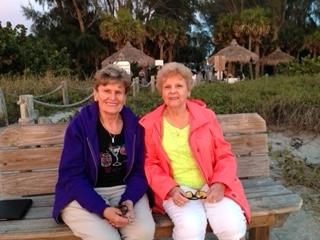
Thus began a renewal of friendship that has helped sustain my mom through her widowhood this past decade. Elaine was not widowed; she didn’t pretend to know what my mom might be going through. She just knew that they both liked each other, and shopping, and cute shoes, and eating lunch, among many other things. Turns out, they were completely compatible winter travelers despite one being an early bird (Elaine) and one being a sleeper-inner (Dolores.) That first winter and every one after that (with the exception of the global pandemic travel interruption) they rented condos in various Florida locations for four or six weeks. They made vodka and tonics in the evenings and they drove their rental car onto the beaches where they set up a chair and talked. They bought groceries and had their breakfasts and coffee at home, and they hung out at the pool. They rented movies and went out to dinners sometimes. I wish they’d gone out even more, and not worried about the cost! My mom was the driver and Elaine, the navigator and copilot. They found flea markets and fish fries and sometimes bought so much that another bag was needed on the return trip home in March. They complemented each other well on those trips. I must admit that I came to enjoy picking Elaine and her suitcases up on an icy January morning before dawn to deliver the two of them to the airport, and likewise for the March airport pickup, when the weather wasn’t any better yet than when they departed.

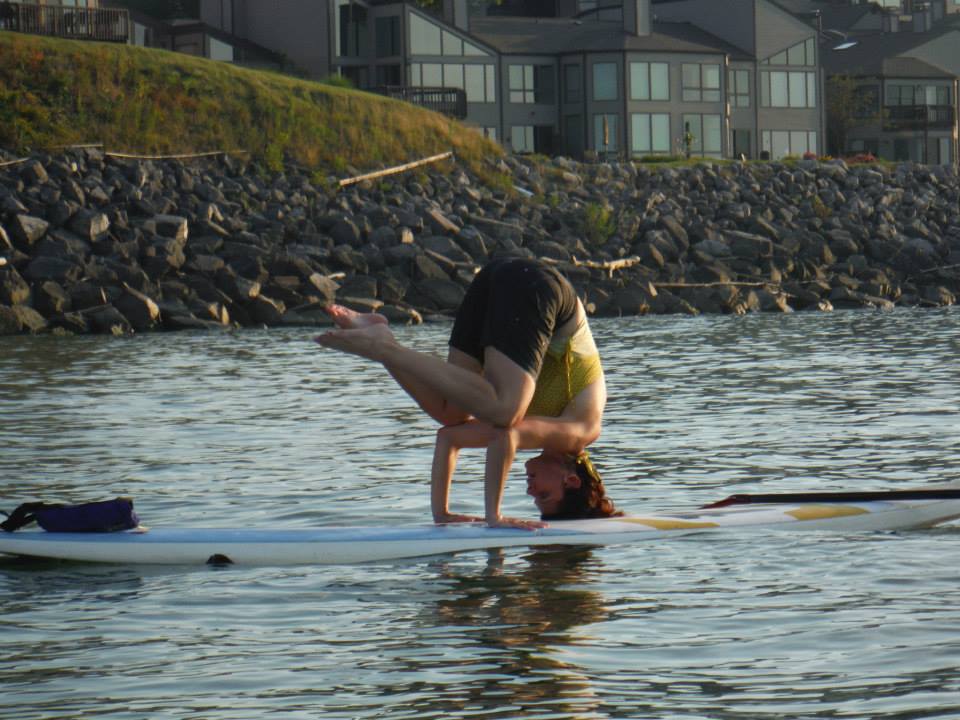
But it didn’t end there, with the winters away. Elaine became the friend who would invite Dolores to the local outdoor pavilion band concert, to the senior club lunch, to the free dinner that came with a community center talk on finances. It is Elaine who suggested that they pick up lunch or pack snacks and open their portable chairs to sit and watch people like me kayak or paddleboard on Coe Lake. I didn’t realize until it was already happening how valuable Elaine’s invitations were. What would my mom have done with so much extra time on her hands if not for these invitations?

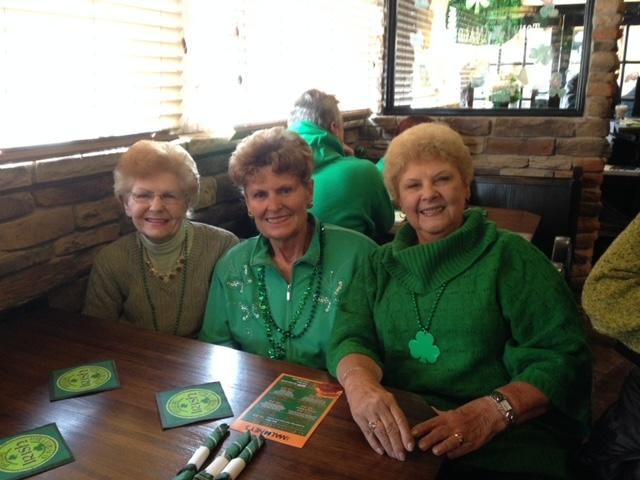
My mom’s best friend of over 55 years, Ellie, was always in the picture, and since they were widowed within a year of each other, they leaned heavily on each other. We’ve always done holidays together with Ellie’s family, our family, and they did weekend Mass and dinner or breakfast together, so it seemed a natural progression to put all of these “golden girls” together. At some point I started referring to them that way, along with Ellie’s son in law’s mom Lois (it sounds reductive to me to even explain these relationships because they are simply all “family.”)

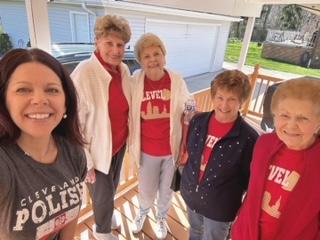
It’s no secret that I have not worked a “real” job more than a decade now, so it felt incumbent upon me to plan the occasional fun outing with my Golden Girls. We started with annual Dyngus Day, the day after Easter, a street festival celebration in Cleveland with Polish food and beer, pierogies, and plenty of polka music. Eventually, the ladies sported matching shirts for this yearly event. We’ve driven to look at Christmas lights, a farmer’s market for fall cider, even an afternoon on a rented pontoon boat. During all these times, the most enjoyable part of the date was hearing the ladies talk about old times…old Cleveland buildings where they had worked, danced, shopped. Where they lived, how they met their husbands, the kind of food their mothers made for dinner. After each outing, I would receive an email from Elaine, or a thank you card, a box of chocolates or even a wrapped gift. More often that not, all of the above. She shared a birthday with my husband and never forgot to wish him a happy one.

These outings won’t stop now in Elaine’s absence; in fact, they began before she was part of them. Even though she was the second eldest of the crew, I didn’t expect she’d be the first we’d lose. She was not frail and didn’t act old. She may have had struggles like knee pain and diminishing eyesight, but she remained enthusiastic and charming in her pursuit of her days’ endeavors. She lit up talking about her grandchildren and great-grandchildren, one or two of which were brand new at the time of her death.

A couple of weeks ago, she and my mom attended their usual chair yoga class together. Later that day, Elaine took herself to the doctor, where it was discovered that she was experiencing heart arrhythmia. She was transferred to the hospital where she had a suspected mild stroke, but was doing well enough to not only visit with family, but to compliment and make friends with the staff. A couple of days later, still in the hospital, she experienced a more catastrophic event that she could not recover from. Thankfully, hospice was her next stop. My mom and I were able to visit her there, as she slumbered peacefully with her beloved family around her, filling her ears and heart with the love she had passed around for years.

As I type this, my mom is out “bopping,” as she calls it, after her hair appointment. Last night, she went to an ice cream social at her church. I know there’s an Elaine-shaped hole in her heart and in her days, but she’s trying, and I’m proud of her for it. If not for Elaine’s intervention a decade ago, Dolores might be a much older version of the woman she is today. Maybe less independent, maybe less fun. A guest on The Modern Yoga Podcast recently spoke about “watering your friends, rather than watering your friends’ plants,” and I can’t think of a better description of Elaine’s friendship. When my mom needed nurturing, “watering,” Elaine didn’t just ask if we needed anything. She showed up, without expectation or pressure.

I’m so grateful she was still independently living the fullness of life right up until the day of her hospitalization. One of God’s angels on earth, and I know she will keep watering her loved ones from a higher ground now. As the saying goes, we are all just walking each other home. What a blessing Elaine has been as a companion.

https://obits.cleveland.com/us/obituaries/cleveland/name/elaine-gommel-obituary?id=52423333
The Best Worst Hour

Standard

(2012?)

The best, worst hour of every day is the hour (or two, but that just doesn’t sound as catchy, now does it?) that I visit my dad, especially now.  Initially, it was many hours at a time, unless it was a hospital behavior ward which limited the visits to one or two hours.  But back in those days, whether it was one hour or several, things were more “worst” than “best” for sure.  There was nothing to be grateful for at that time, other than the fact that my dad was safe.  It was too soon to smile about memories and be grateful for all that he had been.  We were still in the thick of it, losing him while he fought us and was angry with us for letting him be sick.  I don’t know when he let go, I don’t know when he knew how much and what was drug-induced and what wasn’t.  

My mom still has a telephone message on her voicemail from him from three months in, around September, when he was maybe in one of the hospitals or else early on at Manor Care North Olmsted.  She played it for me yesterday, and in it he sounded so sweet.  He asked how she was feeling, noting that he hadn’t been feeling great, and that he didn’t have his phone (he would ask the nurse’s station to call my mom for him in the early days) but that she should try to get ahold of him whenever she could.  It’s a mystery to me when he might have left this, because she was simply there almost all of the time.  I had a message saved on my voicemail too, from October.  I received it while Jeff and Mom and I were in Florida, packing up their now sold retirement home – another emotional story for a different chapter.  In the message to me, he was agitated because he somehow had the idea (he would wake up with these ideas, probably from dreams but then didn’t make the distinction between dream and reality – either that or he just flat out hallucinated it) that my mom was angry with him, accusing him of seeing another woman. He wanted to impress upon me that of course that was absolutely not true, there was no other woman, and would I please convince her of that?  When I switched from a Blackberry to my IPhone, I was told the message could not be saved.  I was initially very upset, but I know that it already wasn’t my dad, and while I would love to have his voice with me always, it really IS in my head. I’m sure I won’t always be able to hear it, but that’s the nature of things.  

It is so hard to describe his early illness and nursing home “incarceration” because he was still very much Hap, and yes fought us on things.  But at the same time, his fight wasn’t convincing because while he knew who all of us were and that he was mad at us, he also thought concurrently that he was on a cruise ship or at the office.  So you see, we really did have to do what we were doing, and never know who/what you’d get when you went to visit.  

I’m going to go back to the past later, but for a different perspective, let’s talk about today since it is fresh in my mind.  It was a completely uneventful visit, but still pertinent to the subject of “the best hour, the worst hour” of my day.  Parking your car at the nursing home is never a fun thing – what’s next, you know, is to walk into a place that is familiar, too familiar, but unfamiliar as well.  You don’t want it to be familiar, it’s for other people.  The anxiety grips you as you walk towards the door, because you  know what kind of smells are going to hit you when you enter, and that there will probably be at least one person hanging out in a wheelchair, looking like nothing you’ve ever wanted to allow into your life. Maybe they are just literally hanging there, belted in.  Their head is probably lolling to one side, perhaps they are drooling.  Perhaps they can say hello to you, but many times they cannot.  Now that you’re “a regular,” the sight of such a person no longer disturbs you and you smile and greet them by name.  That’s part of the paradox of the best/worst.  It never gets less gross, disgusting, inhumane, or horrifying.  Yet you embrace all of those things, and the people to whom they are happening, with compassion.  You don’t notice that Bob’s hair is always greasy and never combed and that he spits when he talks.  You don’t care that the food is all over the faces and down the fronts when you are in the dining room with the others.  You don’t balk at seeing the top of the diaper out of someone’s pants, or people without their teeth.  You stop noticing the damaged toenails of the diabetics or the nose-picking of the guy with the really long fingernails that no one ever seems to cut.  They are beautiful and you come to love them for what you know they must have been once.  You see your own mortality, frailty, and probable future, and you have compassion.

But before that, let’s be honest, it sucks.  Today, I went at lunch time, and my dad was already seated at “his spot” in the dining room, by the window.  He had been shaved, which is always a plus – because he looks like my daddy again, clean-shaven, beautiful skin.  To see him look disheveled, although it is common now, is nothing like the dad I knew (unless we’re talking early morning before the shower – then that white hair was wild!).  Now, though, showers are about every three days in the nursing home.  That part is done by the aides, so we get to ignore or forget what exactly that process looks like.  Does my dad just sit there on the shower chair?  Does he participate, or let them do all of the work?  Is he ever “with it” enough to be embarrassed  any  more?  He made a comment to my mom once at the Manor, pointing out a giant FEMALE aide, and telling my mom “she gives such a good shower!”  If that’s not proof my dad was ‘gone’, I don’t know what was.  The man was ridiculously modest, especially around women.  I can’t say that enough times or with enough emphasis.  So, today, my dad was clean shaven, hair combed back, and that made him look good. He was also sitting up straight, which helps the illusion of health also;  some days, he is leaning over to the left, drooling and with one arm draped over the wheelchair.  He matched today, thanks to whomever took care of him.  His sweatpants and sweatshirt matched or complemented each other, which is always a toss up.  

You may think that we are uninvolved, that we could demand he be put in a particular outfit every day, that he doesn’t like this, doesn’t like that – but we found out fairly early on that most of those type of demands aren’t for the patient, if we’re being honest.  They are for the family, so it doesn’t hurt so bad.  Dad has no idea if he matches, and no one there does, either.  Earlier at the Manor, if his shirt was inside out or something didn’t match well, we might mention it or try to fix it for him.  All this did was to confuse my dad.  It was to make US feel better, not him.  Because he felt just fine with it backwards or whatever.  That’s part of the learning process for us – the prettier nursing home (which couldn’t keep him locked in), the demands on what he wears and eats (which he no longer has a clue about) and things like phones and television remotes (which he loses, or adds to his hallucinations, or throws), and even the photos and calendars and mementos we have placed all around him in his room, are for US.  He lives in a very particular world, and those things do not matter.  In fact, they interfere.  

Today, his appearance made me say “hey, good lookin’!”  And I leaned over him to give him a hug.  He hugged back, which he doesn’t often do, and he smiled.  He seemed strong today, awake and aware.  Not aware he has dementia and is in a nursing home, but more aware that it is daytime, I am sitting with him, and that he should pick up his fork and eat lunch.  Other days he looks vacant, hazy, or has his eyes closed even as he mumbles as if we are speaking .  Still other days he “answers” someone calling to him a few feet away, a hallucination.  Some days, he needs help eating, having no idea or no desire to engage with the food, or because in his mind, he is in a different reality.  He will treat his napkin like a form and his finger like a pen and begin working, despite the plate of food in his way.  But today, he was pretty good.  He burped, and then laughed.  A return to being a baby, is how I look at it.  He looked at me sheepishly, and I told him he was just cracking himself up, that all men were seventh grade boys at heart.  He liked that, and he laughed and looked at me.  

Nowadays, those are the days that make me cry.  When my dad smiles, not a polite smile for someone else but a smile because he is chuckling at something, there is nothing in the world that is more beautiful for me to see.  He was always such a good looking man, and smiling was such a part of him.  When he smiles at me, with those blue eyes and beautiful face, I miss my dad.  Those few times are glimpses into the happy, Happy man that he was.  And happy for Happy was a deliberate choice.  He was filled with natural optimism and glee, but he just refused to be anything but happy, no matter what the situation.  And I love him for that, and I embrace that lesson from him, but oh, how fast the tears come, though I’m smiling through them, when he smiles at me.  Then I hug him, and kiss him.  

The meal is always a variable, too.  Today, he was drinking okay by himself from a normal cup.  I keep meaning to take a milkshake to ascertain whether or not he can still drink out of a straw, in case it comes to that.  Because more and more he is having trouble with the mechanics, and the brain command to DO the mechanics, of eating and drinking.  Sometimes, he forgets in mid meal after he was just doing decently.  Often while drinking, once the glass is half empty (yes, yes I know Hap would say half-full) he holds it to his lips but can’t get any.  I have to remind him, tip your head back, dad… and so far, that helps and he is able to get the rest out.  As for the solids, well, it’s a mess.  He probably can’t really use both hands with a knife and fork, so he uses one hand or the other and a fork or spoon to feed himself.  Today, he began with his jello (that’s another thing I refuse to correct – I am gonna let that man eat dessert first!) and yes, it is messy.  They usually put a giant sized bib on all the residents, which early on seemed so wrong for my dad and he often didn’t use it, but his skills have deteriorated so it IS useful – but I don’t think he is any more aware of what it is or that someone placed it on him than he knows what day today is.  Since he had used his spoon with the jello, he dug in to the green beans with it next. That didn’t work as well, so I suggested the fork.  But until I replaced the spoon with the fork in his hand myself, he did not make the change.  And so, it is messy, but I don’t help him unless he physically will not feed himself.  I figure, the longer he can do something, we should encourage him to do it, if for no other reason than to give him something to do in a long, long day of sameness.  But again – that’s me talking.  His day may seem full and exhausting to him, and in fact I don’t think his day is a day at all.  I think he cycles in about three hour increments.  There are days he is fabulous at lunch and terrible at dinner, and days that mom comes home saddened because he seemed so bad at lunch, but when I go for dinner he is a new man.  Such is this disease – whatever it is.    

Now that my dad is more ill, and he is safe and cared for, and my mom is doing decently and is healthy, I have the luxury of feeling like these are not the worst of times. That enables me to have the best hour of the day with my dad, too.  While he may be concentrating on his green beans, I can be nostalgic and remember who he was.  And while, of course, I didn’t love him enough or thank him enough when I should have, I can now sing to him, songs I know he used to like, like Donna Wells “Happiest Girl in the Whole USA” or “I Never Promised You a Rose Garden” by Lynn Anderson, or old country classics or folk songs.  He liked “Green Green Grass of Home” and “Honey,”  and Kenny Rogers songs.  I can rub his shoulders while I talk to him, and if I have time for a real treat, I massage his arms and legs with moisturizer.  Listen, I’m no saint – I put gloves on first, for his protection as well as mine.  We don’t need to exchange germs and bacteria any more than we are anyway, and okay I admit it…I still get grossed out by bodies.  But that is okay… because I know, no matter what level of sanity someone is at, it just feels damn good to have someone massage your arms, leg muscles, neck.  I know why I love manicures and pedicures, and it’s not just because of the pretty polish. 

I recently saw Amy Grant on tv, discussing caring for her elderly parents.  Her mother had recently died after having dementia, and her father has it now.  She was distraught that this was what the final chapter was like for two faithful servants like her parents, but she said that she was very moved by what a friend told her:  this is the last great lesson your parents will teach you.  Amy decided that if this was what her parents were teaching her, she damned well better be all in and learn it.  While the choice is not a conscious one of my dad’s, God works in mysterious ways and I know that I am learning about myself, my husband, my family, and every individual I come across during this experience.  Part of the best hour of the day is being forced to sit there and really not think of or care about anything but reflecting on my dad, on the life he gave us, on the relationship that we had… of all that he gave up, joys he experienced, how he has suffered.  How much I owe to him.  How unique and wonderful he is.  How blessed I am that this hurts so bad, that I have nothing but good memories and that’s why this is so devastating.  What a gift to be 43 and just now to have lost my dad, and what a gift to be so torn up about it.  Some people don’t talk to their parents.  Some people live far away from them. Some people are always fighting.  I am devastated to lose my dad this particular way, but I am so blessed and grateful that it IS this painful, simply because of what that says about all that came before.  Sometimes I wonder if my dad’s prayers are being answered.  If he prayed his whole life for my mom to be healthy and live a long life, for his children to be healthy and prosperous, and for God to give him the suffering instead.  I would not doubt it.  

I know that the angels who take care of my dad (well first of all, I do know that they are not all, and not always, angels) do not know him at all.  They don’t know that he was much more fun, kinder, more generous and loving than the person they take care of in the bed next to his or the room across the hall.  All I’ve got is our example to show these people how remarkable he was.  Do I love that every single nursing home and hospital so far has brought us people who sought us out, saying things like “wow, you girls and your mom sure do love your dad!” Hell yes.  I’m proud that people notice, and I am sure that is part of my sisters’ motivation too.  Not as in we want people to see us visiting so we get ‘credit’ – no, not that at all.  Rather, it is what he truly deserves, and he also deserves to have people see it and know it – THIS is what love looks like when you have been such a wonderful father.  Learn from him, people.  This is a man we will never leave, never forget, never cease to thank and love and blanket with affection to show the world how special and superior he was.  Everyone thinks this of their loved one, or most, I am sure.  But, sorry – we are here to show you different, more.  Hap Harral was in a league of his own.  

Touch.

Standard
Touch.

When a baby is born and you pass her around, you wonder what she is thinking as she lies in your arms. Living in another state from our grandchildren, we spent the newborn visits hogging the first baby, trying to absorb her and letting her absorb us…hearing our voices, feeling our sway, sensing our scents. On her tummy, and eventually on her back, once she was stronger, her dinosaur bones, I would slowly spell out the letters of her lengthy name with my index finger. “K…e…n…n…e…d…y…”and finish with a big tickle up the neck, “KENNEDY!”

I could soon enough see that she came to expect it from me. Which was, of course, the point.
Eventually the child could walk and talk…funny how that happens, and quickly…and her mama turned the spelling of her name into a rhyme, “K-e-n-n-e-d-y, that’s my name, I’m sweet as pie!”
And, as kids will do with every parent’s perfect plan, Kennedy twisted that rhyme into her own ridiculous singsong, apropos of nothing, “K-e-n-n-e-d-y, that’s my name, football pie!” Then the laughter, the glee.

I’m sure I did the same thing thirty years ago on the back of the baby girl who named me Mamie, albeit with a much shorter name, K-a-t-i-e. I have done it using the few letters in Noah. “Again, Mamie!” The unique arrangement of letters in Loftyn. I have barely begun to do it on the quickly broadening back of Jackson, whom we haven’t seen since late December, as he grows and forgets while we all quarantine in our respective states. I may have done it only once to the new Myles.

My calendar tells me it’s almost time for what would have been my monthly hair color appointment at my friend Mary’s salon, and I remember a wonderful woman who retired from there named Penny, whose gentle, capable hands at the shampoo bowl reminded clients of a loving grandmother. Penny always made sure there were no suds in your ears and that the water was never cold.

Beyond even that date will come Easter, when sometimes my sisters and I would crash our hard-boiled eggs into each other, “egg fight!” Someone wins, someone loses, but then everyone wins because two of us like yolks, while one of us likes only the whites. It is often a holiday that my brother-in-law has had to miss because of work, likewise his son, the chef, cooking for families who prefer a restaurant for their fancy ham, maybe pork belly and farm-to-table eggs.
My mind wanders to their other son, all six foot four of him…did he let me draw his name on his back for comfort as I “rode” the MRI machine with him as a toddler? He’s married now, and his wife gives the longest, most heartfelt hugs of anyone I have ever known.

Just outside both my back and front doors, birds are building nests. Spring is dawning, which would usually be yet another excuse for a pedicure with my mom. Last time we went together, before her winter vacation in Florida, the young women massaging our calves with lavender sugar scrub were discussing an Instagram post in which some unknown harlot tagged our girl’s boyfriend. Should she text him? Ask him to explain? Or become Nancy Drew first and confront him with evidence?

As the weather warms, I yearn to climb onto my stand-up paddleboard, hibernating in the basement, and to lunch with my friend afterwards. And to reach my fork to sample from her plate, or share some fries, maybe a sip of each other’s beer.

Zoom and Facetime prevent the grandkids from forgetting our faces, as does an old-fashioned letter written to help bridge the chasm. Distance isn’t the problem; my best friend and her husband drive across town to stand six feet from their grandsons. My sister does the same to see the babies she moved residences this past year just to be closer to. Her daughter had ice cream delivered. Proximity is not the problem.

Today, the sun shines and more than 50 degrees Fahrenheit are promised, so I will take my mom for a ride in the car since we’ve been shuttered at home together-ish. Side by side. Last week when we did the joyride, we stopped in the driveway of her best friend who came outside to chat from a distance, bundled in an over-sized Cleveland Indians jacket. The boys of summer, benched for now. If we do the same visit again this week, we may have to call that our Easter since it is a holiday usually shared with her family…our family.

Months ago, as regular flu season kicked up, I stopped ending my yoga classes by giving everyone a gentle neck massage. Some folks say that’s their favorite part of class. Others, like my friend Joolz, only tolerates it. She doesn’t want to reject my touch, but she is one who has trouble relaxing, finding peace at the end of practice. Which makes her appearance there even more valuable to me.

Mass on Sunday is on TV for now, and while I may have balked at the exchange of so many handshakes at St. Bridget’s and often surreptitiously squeezed sanitizer into my hand and my husband’s (or once, the open handbag of the woman in the pew in front of us!) I do miss the waves, winks, and thumbs-up of those friends, each of us easy to find in the same pew week after week. The big ones and the little ones. Some of us grabbing breakfast afterwards. I miss the Eucharist. It is called Communion.

My original yoga guru ends class by saying “unity in diversity; all are one.” I miss meeting her for coffee after class. I miss the group of faces I would see at noon on a Wednesday, and even more the several with whom I shared tiaras and mimosas one year ago today for a 50th birthday celebration. Thanks, Timehop.

Before this all happened, we had Thanksgiving and an 80th birthday party for our mom. We had a Christmas with the kids. Before this happened, we rang in the new year on a mountaintop from a hot tub while fireworks exploded in the valley below. Before this all happened, we made it to the in-laws in Florida for a golf visit. Before this happened, we had a weekend in Quebec with our friends. Before this happened, we celebrated our bestie Ken’s birthday.

Before this happened. And now this has happened. And everything from this point on will be “after.”

I just miss touch.

touch3

(Photo from Mother’s Day 2019)


Every day is Fathers Day…

Standard

Not long ago, I found a letter that my dad wrote to me in April, 1987. The reason for the letter was my high school senior retreat day at Padua High School. It was a beautiful surprise to see my dad’s handwriting again, all confident, cheerful and scrawly, and to “hear” his voice again in those words. When I saved this letter and put it away, I’m sure I never gave his words another thought. The thing is, though, I didn’t have to remember his words, because every single day, he told me the same things in his actions. It amazes me how much his own words mirror the words I used later in his eulogy to describe him and his life. This is vintage Hap, solid advice! And it reminds me that while we may think the most important thing we can say to someone while they’re here is “I love you,” the greater gift may be to say, “I know that you love me.” The letter is pictured here, but difficult to read, so I will transcribe his words: (spoiler alert!! He spills the “secret of life.”)

Mary Beth,

Time for our Father Daughter talk! (Equal billing)

Mary, the whole world is yours if you shut out the negatives. Don’t think the bad of anything. Enjoy your work–your school, now or ever. Please try & be happy with any situation you’re in. I know it sounds stupid but you can make or train yourself to accept & enjoy all challenges. It’s never too hot, too cold, too far, too anything. Don’t be afraid to reach out. I enjoy you & I love you & I want you to be a doer. Mary, honest, the secret of life is to love man and God, don’t dislike, nothing is worth the emotion of hate. I tease you about your loving me. I know you do. I get a lot of mileage out of teasing you about it. It’s really more important to me to know that I love you. You & your sisters have always thought of me & are nice to me, you all know I loved you. What I really want you to realize is how special Dolores Mae is. None of us can comprehend how much she loves. The nicest thing you can ever do for me is to treat mom as the special person she is. Then treat yourself as the special person you are. Reach out & enjoy. Please care enough about the people you know & live with to be a positive influence on their lives. I truly believe you are special. Take whatever school or job you may & love it & enjoy it until the next one. Try to enjoy everything & every one. I wish I had realized much earlier in life how special the gifts of God are. End of lecture. I love you. I will never not love you. -Hap


Beam Me Up

Standard
Beam Me Up

“Beam me up…

Gimme a minute

I don’t know what I’d say in it…

I’d probably just stare, happy just to be there

Holding your face.

Beam me up…

Let me be lighter, I’m tired of being a fighter

I think…

A minute’s enough


Just beam me up.”

She fell in love with the song from Pink’s “The Truth About Love” album as soon as she heard it. The dramatic instrumentation, the tender, heartfelt vocal, the melody soft but strong with those minor keys of angst, building the feeling. She shared Pink’s song and the lyrics with plenty of people, because the song reminded her of profound losses: her sister’s baby, eventually her own father (…in my head I see your baby blues.)

The only detail that didn’t sit well in a song so perfect it always drew a tear and required a replay was the part about a minute being enough. What is that about? How could a minute be enough when you long for and miss someone so desperately, and then you get to be “beamed up” to see them again? A minute could never be enough.

Her dad is in her dreams, sometimes. Fairly regularly, in fact, but never the focus. His presence there is purely incidental: it is a holiday at home, so of course he is in the family room in his chair, or outside with the grandkids. She hears his voice in reply to someone’s question, catches a glimpse of him from the corner of her eye smoothing back his shock of white hair the way he always did. He’s there, as he should be, but in the dreams she is always conscious of the looming dementia. In the dramatic irony of a dream, she knows about the dementia because it has come and gone. She knows everything about it, about what’s coming, but he does not. She awakens troubled and anxious, vestiges of her sleep-self worrying that he is still driving but losing his sense of direction, still talking but sometimes seeing things. She’s afraid he will mention a puppy under the table or a bug skittering in the corner. In the dreams, she’s stressed, holding it all together and not sure what to do. But some part of her consciousness always knows it is a dream, because she knows how all of this ends. She simply can’t stop it this time, any more than she could in real life. The dream isn’t about him, so it doesn’t matter. She’s just dreaming, and he is there. Just like the pets and the kids and the occasional former co-worker or high-school classmate. Like intricate puzzles put together with a few of the wrong pieces, forced in awkwardly, dreams are.

One September night, still warm enough to sleep with the bedroom window open for the sleek purring body of her black cat to somehow relax into the tracks of the frame, she understood what it meant to be beamed up.

She dreamed, and this time it was just her and her dad. There was no context, no preface. They stood outside in the darkness facing each other, as suddenly as if they had both been dropped there like a slide from an old projector. Outside of what or where, she didn’t know, couldn’t tell. A place, a building maybe? They were a mere few strides apart, facing each other in the almost-blackness. In a fraction of a second she understood that this dream was different: he had already died, and he knew it. The dementia had come and gone again, and he knew it. And he knew that she knew it all. Revelation was instantaneous. They rushed to approach each other with arms open, no time to waste. He wore a shirt she didn’t recognize, the only thing that wasn’t familiar to her. They hugged, and her dad was once again the right size; the right height, a bit shorter than his youngest daughter in adulthood (he had introduced her around the dementia ward as “the tall one”) so her face was over his shoulder at the crook of his neck, the right density. His back and shoulders were smooth and strong and bullish, the way their dad had always been. Robust, immovable in a hug. He smelled like dad, the cloud of soap and toothpaste and shaving cream that had always breezed behind him as he rushed down the stairs, the last one to shower in a houseful of females. Somehow she could even see his tan in the darkness, sense rather than see the glossy blue-against-white of his mischievous eyes. They hugged strongly—tightly, but not hard, he was so staunch and she gripped the muscles of his back for emphasis. She knew this would be brief, and she rushed her tearful, joyful words, “oh, we love you and miss you so much!” And because she had always joked with him, added, “we don’t want to, but we do!”

He chuckled, still in the hug, unable to see each other’s faces except in mind’s eye, and said, “I know.”

Then they pulled back, still linking forearms but facing each other in this unnamed night-place. His smile was perfect, lighting up his face in its familiar jocularity, and he said to her, with just a trace of disbelief and humility, “I really love it here.”

Her heart spilled over to hear those words. She had already believed he was in a better place, THE better place, and it was what he had believed too. But to see him, feel him, smell him, and recognize the same wonder in his voice that she had heard him use in the past to describe a mountain, or a golf shot, or a talented child, or a great meal, convinced her down to her soul. She grabbed him again, sliding her arms around his shoulders and squeezing his meaty clavicles with her fingertips.

“I’m so glad,” she choked out near his ear. And she meant it. And she wanted him to know that she meant it. She was so happy for him, and she was desperate to impart the whole remaining family’s love and joy to him in what she inherently knew was a very brief opportunity. She squeezed him tighter, burying her face in him. He squeezed too.

She woke up.

Just like that, she was back in her bed at around three in the morning, her husband asleep next to her, her cat curled up and humming, the sounds of the night falling softly through the screen. The whole thing had taken no time at all. A hug, a few words. But now she could feel her dad in her arms. His voice and scent and warm, living skin lingered. She hadn’t hugged her dad that often when he was alive; she would be more inclined to chuck him on the shoulder, while he would have yanked a piece of her long hair from behind and then dodged her retaliation. She felt, for a moment, what she supposed could be called bliss.

The vestigial flavor of that dream lingers, and she deliberately goes inside her thoughts to enjoy it from time to time. She had her dad back, her real dad, tangible in her arms. And then one day, a couple of weeks later, her earbuds delivered that beloved Pink song while she was walking to one of her sister’s houses, to collect the mail or let out the dog, on a sunny, end-of-summer day. Now, it all made sense, and the lyrics didn’t leave her frustrated any more. A minute was all it took.

A minute was enough.

http://https://www.youtube.com/watch?v=PFYm9LKsuUo

From Rachel, on her first birthday… (with peace)

Standard

A conversation today with my sister prompted me to post this poem. I haven’t thought about it for a while. I wrote it in 1996, when I sat down with paper and pen and it flowed out almost in its entirety, fully formed. I definitely felt like a vehicle or a channel, because I did not have a hand in creating this–it came straight out in the pen. It was made into a framed print, a photo of which I have included here, and I no longer had it saved as a document anywhere. When I sat down today to “copy” it down, I still knew it by heart. Rachel’s spirit, or the Holy Spirit–but I humbly admit, not my own. I hope it comforts someone else out there.

Rachel S Lemon Hospital photo, November 26, 1995

Rachel S Lemon
Hospital photo,
November 26, 1995

From Rachel, on her first birthday

It is okay

To hurt, this day

For things I’ll never be…

But don’t forget,

Your world holds things

You’d never want for me.

Disappointments I will never have,

Pains I’ll never suffer

I will not fail

I will not fall

And we’ll never hurt each other.

By today, I may have walked

But would I have ever run?

By someday soon, I may have talked…

Would I ask of you, “how come?”

So there are many childish words

You never will hear spoken…

No, my heart was never whole…

But my heart was never broken.

I may not get to be with you

But I’ll never live in fear

You’ll never get to see me smile;

But you never saw my tears.

I lived from warm & loving womb

To a castle in the sky…

And there’s no need to wonder how

There is no reason why.

I paused here, not to hurt you

And not to say goodbye…

But just to put my angel face

Before this family’s eyes…

So now you have an image

Of the girl who would be me

For you are still not ready

To blindly set love free

Until the time when you believe

The things you cannot see.

Just a paragraph or two from today’s work on NaNoWriMo…

Standard
Just a paragraph or two from today’s work on NaNoWriMo…

Among the petrified plots, we found a few softer, rocky mounds in the grass, some marked and some not very well, and wondered if this was evidence of (relatively) recent burial. That was a haunting possibility, and I’m not ashamed to admit I gave a wider berth to those plots, walked more tenderly on the grass near them. Others, perfect rectangles bordered in stone, bore one headstone for entire families with names and dates listed one by one in chronological order. The names themselves charmed me, intoxicated as I am by all things Irish, and I once again felt like I was in one of my favorite literary works, this time maybe McCourt or James Joyce rather than Maeve Binchy’s kitchens and buses, but I was sobered by the knowledge that these names represented actual people. Characters who had walked this very ground, perhaps. Folks who had stood on the beach I had just left hours before. I don’t know you, but I acknowledge you, I thought. You may have been ornery, artistic, teenaged, or elderly, so I will spend this one moment witnessing that you were a person, completely unknown to me but now connected to me in the fragile, fleeting way in which we are all part of this same family of mankind. On a more intimate level, I take this moment to imagine you alive, because there is a reason God brought me here to this place in particular, to stand over your grave and look upon your name, silently hoping your rest is not simply peaceful, but blissful. Catherine O’Sullivan McKenna, who was preceded in death by her son Mike but not by her daughter Mary. Mary Briget Ferriter, three months old. As if each were alive briefly, standing next to me, I felt an impulse to reach out and bear witness to her life, appreciating the opportunity to have shared in it so many years later, from another dimension.

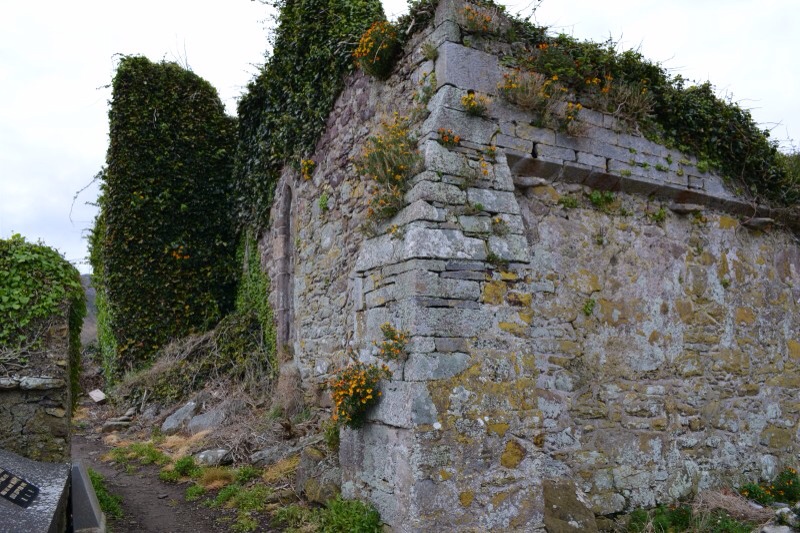
Surrounding the graves were the crumbling ruins of stone archways, walls, and tiny outbuildings. These were cold, foreboding, but softened by slick moss and ivy growing wildly. Day in and day out they stood sentry, usually with only the departed souls to see the wild yellow spring flowers cropping up in the clefts between weathered stone and any ancient mortar. What pure grace, “generous, free and totally unexpected and undeserved” that I was allowed to share this moment with them.

‘Grace’, Komonchak et al (eds), Joseph A (1990). The New Dictionary of Theology. Dublin: Gill and Macmillan. p. 437.

IMG_9680.JPG

“Walking on Water” Published in “The Mill” 2014 (Baldwin Wallace University)

Standard
“Walking on Water” Published in “The Mill” 2014 (Baldwin Wallace University)

Walking On Water

           In the summer of 2013, I was 44 years old. I feel like myself only in summer, the kind of person who is miserable for the long Cleveland months when the temperature is below, say, 64 degrees. Obviously, I live in an inhospitable climate. But during the summer months, I am alive. I carry spare shoes everywhere with me in my car to walk outside, I practice yoga in parks on tree stumps or bridges, and I don’t begrudge the ugly humidity that makes everyone look shiny and slimy, with dirty hair. I love and embrace it all. It’s easier for me, no doubt, because I am currently taking a break from employment to finally go to college full-time, so I don’t need to put on layers of spackle and hairspray, dress in a suit or Spanx, or worry about armpit stains on my blouse. I gladly parade my sweat as I walk with my ear-buds tightly placed, eating as many meals outside as possible and refusing to come indoors. These summer days, as hot and oppressive to some as the whoosh of air which accosts your face when you open an oven on Thanksgiving, are what I spend the rest of the year waiting for.

            This past summer, however, my Polish/Irish/Lebanese fair-in-winter, olive-in-summer skin had barely seen the outdoors. It was the summer of Hap—that’s my dad’s name—again. Two years prior, it was also a summer of Hap, when my dad took a final rapid slide down into a well of a dementia marked by hallucinations, violence, and delusions. Since then, my mom and sisters, along with our husbands and children, had visited him daily in his residential nursing home—a nursing home made necessary by his physical strength and that of the aggressive delusions which plagued him; hallucinations of people harming us, his family, which left him no choice but to try to take down the aggressors. Our dad, our defender.

            Over time, Hap grew weaker, physically and mentally, and then, the summer of Hap 2013 became about his final days. He had been hospitalized for a while with digestive issues which seem unresolvable at that point in his illness, and then he had been sent to hospice-care to transition through to death. My family members and I had seen nothing but the inside of his medical bedrooms for the better part of two months. In the end, we were grateful that his final time occurred in the summer, because his grandkids were home from school and around to visit him, and to spend time within the cocoon of the very last days we would all be together as a complete family, the finals weeks, days, hours, minutes with our beloved mentor and patriarch, our team captain.

            The time was rich; irreverent, fruitful, angry, dark, food-filled, and emotional. We ate fistfuls of Honey-baked ham and packaged cookies to pass the time. We talked, recalling old memories…we sang (John Denver, poorly), we mocked each other. We chastised my dad, who was mostly unconscious and certainly unaware by this point, for keeping us cooped up all summer. We made funeral arrangements. One day in July, I slipped out into the sunshine to a waiting bench near a statue of Jesus, and I wrote out my dad’s eulogy in longhand, a speech I had been giving in my head for years, knowing always that it was incumbent upon me to try to do this remarkable man justice in words. A nun saw me from the window of my dad’s room and assumed I was sunbathing. I did not correct her. There was something perversely funny to me about tanning in the back of a Catholic institution meant for the dying.

            After more than a week in hospice, I looked at my calendar one day at my dad’s bedside, and realized I had signed up for a stand-up paddleboard yoga experience on Lake Erie for the next day. I’m sure it had seemed like a grand idea at the time, a group decision with a couple of yoga friends. The daughter my dad had known would never have attempted this—I was not an athlete by any means, spending much of my life a little overweight and a lot under-exercised. I was not a strong swimmer, if you could call me a swimmer at all, and I don’t know if you could. I may or may not be able to keep my head above water and make some progress in a time of trouble on water, but I’m not certain the resulting action could accurately be labeled “swimming.” Yoga was the only exercise I did, and even that was the result of my recent search for peace during my dad’s illness, not any physical prowess. I also have a healthy fear of large bodies of water, and no confidence in my ability to perform this scheduled outing. It was decidedly out of my comfort zone.

            I texted my yoga-friend Jenny, because the excursion had already been paid for, and I hoped that she could find someone to take my place and enjoy the experience. But as the day went on, I felt a nagging pull at my consciousness to consider leaving my dying father’s bedside for a few hours to do something completely out of the ordinary. I was scared, not only of being able to navigate the actual physical activity, but that after all of these days and nights spent in this room, my dad might slip away during the one time I was absent. To be truthful, I also feared the impression it would leave with others: my family, the nurses, the general “people” who would undoubtedly ask, “what kind of daughter would leave her dying father’s bedside to go play watersports on a summer evening?”

            I think it was that final bit, though, that actually convinced me. My dad, a man of many unique and wonderful characteristics, was most known for walking his own path, no matter what anyone thought. He sold investments to wealthy clients wearing a Cleveland Indians tee-shirt (he was about to be buried in one, too). He drove goofy vehicles which had personality (most recently a cobalt-blue turbo-charged Subaru) no matter how luxurious a car he could actually afford, and he took his wife (our mother) on all of his business trips because he wanted her to see the world with him. If he knew that I was bailing out on something I’d committed to simply because I was afraid of how I would look to other people, he would shake his head at me. It began to occur to me that this activity could actually be a tribute to my dad, that he would get me through it and inspire me to appreciate the beauty and accomplishment and camaraderie of what I was about to undertake.

            I had a talk first with Paula, the wonderful hospice nurse who had been taking care of my dad every weekday of his hospice stay. She was a friend by then, it being such an intense time for sharing family stories and feelings with intimate strangers. She also knew my dad, his physical condition, very well. It had started to deteriorate more rapidly, and we knew the end was nearer than it had been. I asked, “Paula, what should I do? If I have a thing to do tonight, do you think it’s okay for me to leave to do it? Or is he close?”

            Paula (who by the way, my dad would have absolutely loved and would have probably nicknamed something like “Scrappy” because she was small but fierce), looked towards my dad’s bed, looked back at me, and repeated both actions. Then she said, “You know him. What would he tell you to do?” Well played, Paula. And right on. So, with the confidence born from the knowledge that nothing else can possibly even matter when you’re about to lose someone forever, I walked out of my dad’s room that evening, not knowing if I would see him again alive. Of course, as I grasped his hand and kissed him goodbye, I said (as I always did), “See ya tomorrow!” But I felt like something had changed. Something bigger was happening, and it almost felt as if my dad had already left that body.

            Incidentally, one of the most valuable things about hospice for us was the way that it gave us our dad back, restored to his old self in a way. The dementia had been so grueling, and his perceptions and statements so out of character, that once he was debilitated enough that he could no longer speak, we were left with his beautiful blue eyes (for the first day or two, until he became semi-conscious at best) and the feeling that he had been delivered from dementia, and instead lay dying here as his former self, in his right mind. The hospice caregivers changed his bedding every day before we even arrived, shaved him, brushed his teeth, washed his hair, made him look like he was in his own bed at home, no longer hooked up to IV’s or tubes. So when I leaned over him that day, he smelled of shaving cream, toothpaste, and soap, just the way I remembered him. I carried that smell with me as I drove away, recalling how it would come down the stairs ahead of him on Sundays, when he was the last one ready as the rest of us waited to leave for church. A man with a wife and three daughters is last in line for a shower.

            The day was one of the hottest that July, maybe in the nineties. Despite that, I drove to the lake with my windows and sunroof open, drinking in the moist heat and the dangerous feeling that I was somewhere I was not supposed to be. I felt fragile, and grateful that the friends I was about to meet for this excursion were not close friends yet. They were women around my age, with similar interests and problems, compassionate and supportive, but I knew they would not ask me questions, hug me too tightly or lingeringly, or ask if I was okay. They knew, probably better than I, what I was there for that day and the restorative power it might have over me. They had each already buried a parent. Their support was silent, but loud. The remaining participants were strangers. It was a welcome feeling to just be an anonymous body as we all schlepped the cumbersome paddleboards off of a trailer and toward the Great-Lake Erie. Only my two yoga friends knew that I was in a liminal space, “the one whose father is actively dying.” But we couldn’t concentrate on that: we had to worry about getting up, and then staying up, on the boards bobbing under us on the water inside the break wall of the lake.

            Once we were all assembled and following the leader, I noticed bystanders watching from shore. Looking through their eyes, I realized that we looked fierce, like models on a women’s magazine, unaware of our ages and instead feeling like lithe, strong teenagers. We had on an assortment of swimsuits, board shorts, yoga clothes. No cell phones, no watches, just sweaty hair up in ponytails because all of us still wear it long (I heard somewhere that if a woman can remember Gerald Ford being President, she is too old to wear a ponytail). We attentively listened to Deanna, our instructor, who seemed to embody light: blonde hair, bronzed skin, with a strong and casual manner, competent. We were in good hands. We had already developed some confidence in our strength through yoga, these friends and I, but we were all shy about our abilities on this giant, often angry lake. There was little conversation, only concentration, bodies held at attention, and deliberate motion.

            As we traveled up the shoreline, past indescribably unique and lovely homes and a bit away from the safety of the shore, Deanna led us through yoga poses. Yoga inherently employs “pratyahara,” the act of suspending the senses, of coming inside…so while there was a handful of us sprawled out some yards from each other, going through the same motions, we each practiced in isolation. I could feel my friends Jenny and Beth near me, all of us supporting each other with our presence, with our intention, and our breath, sending waves of friendship out from our hearts even as we were fighting hard to maintain various balances on a floating board. We generated immediate and copious sweat, which ran down not just our faces but our entire bodies, pooling in our bellies when we lay on our backs, making our hands slippery when we stood inverted in downward dog. We were ruddy, our ribcages heaving with exertion, slow, steady exertion. It was like being squeezed out, a sponge from a pail of water. Loose hairs frizzed around our faces or stuck to our temples. Any remnants of old mascara had long since smeared away.

            I opened my eyes and squinted around me, the glare of the fiery evening sun slapping the dark glassy water, the sky so bright my friends were rendered just silhouettes to me. My eyes burned from the salty brine of sweat, wind, and emotion. It occurred to me that my dad was just such a silhouette now, too. I suddenly felt positively impervious to any attack, ten feet tall and bulletproof. I was aware of my upper arms and shoulders rippling in smooth strength as my paddle dipped into the water, pushing my hips forward, potent. I was as strong as I had ever been, as beautiful as I would ever be, and as capable as any other person on the planet. Without warning, I sensed my dad’s presence so strongly around me that I said aloud to my friends, “I know now that there is absolutely no place else on earth that I should be at this moment then here on this lake with you.”

            I wondered if this sudden peace and feeling of connection with my dad meant that he was slipping away, even as I was gliding along in this moment of bliss. I contemplated what I would feel like if my dad took his last breath while I was on this lake, while my mom and sisters sat close and held his hands and spoke soft words to him. I knew in that moment that it would be perfectly correct if that’s the way it happened. My inner voice reminded me that I was the one who lived next door to my parents, I was the one who worked with them for fifteen years. Maybe it would be a wonderful gift to my sisters for them to finally have as much of a portion of my dad as I had always been so spoiled to have. If he passed away in my absence, I would not regret my decision to choose this spiritual experience of my dad on this lake.

            At the end of our practice, as we drifted, lying on our backs on the paddleboards with the cinnamon-hot July sun setting behind us, I closed my eyes and felt buoyant in mind and spirit. This body of mine, this body of water, and this body of friends and family was stable and certain. This mighty lake may as well have been the very palm of my dad’s hand, and the deep, wide well of his heart. I relaxed. I thought of my dad’s broad, brown hands and how they had held me up on countless summer vacations, held me by my ribs in oceans and hotel pools, tossing and playing with his kids like toys. We were never afraid. He always caught us, held us aloft. He always would. The palm of my dad’s hand, the palm of our Father’s hand. More gargantuan and mighty than this lake, but tender, both.

            Swirling, floating, feeling more accomplished than the accomplishment merited, I sensed rather than saw the sun melt low and hot into the horizon, and wondered without fear or anxiety if my dad’s light had just dipped below the surface of this life. I celebrated Savasana, the yoga pose of relaxation, drifting on a trembling sunset, feeling and tasting hot, wet salt on my face, sweat mixing with healing tears, as welcome as they were valuable, flowing unchecked. I never felt closer to my dad than at that moment; I’d never loved or appreciated him more.

Image